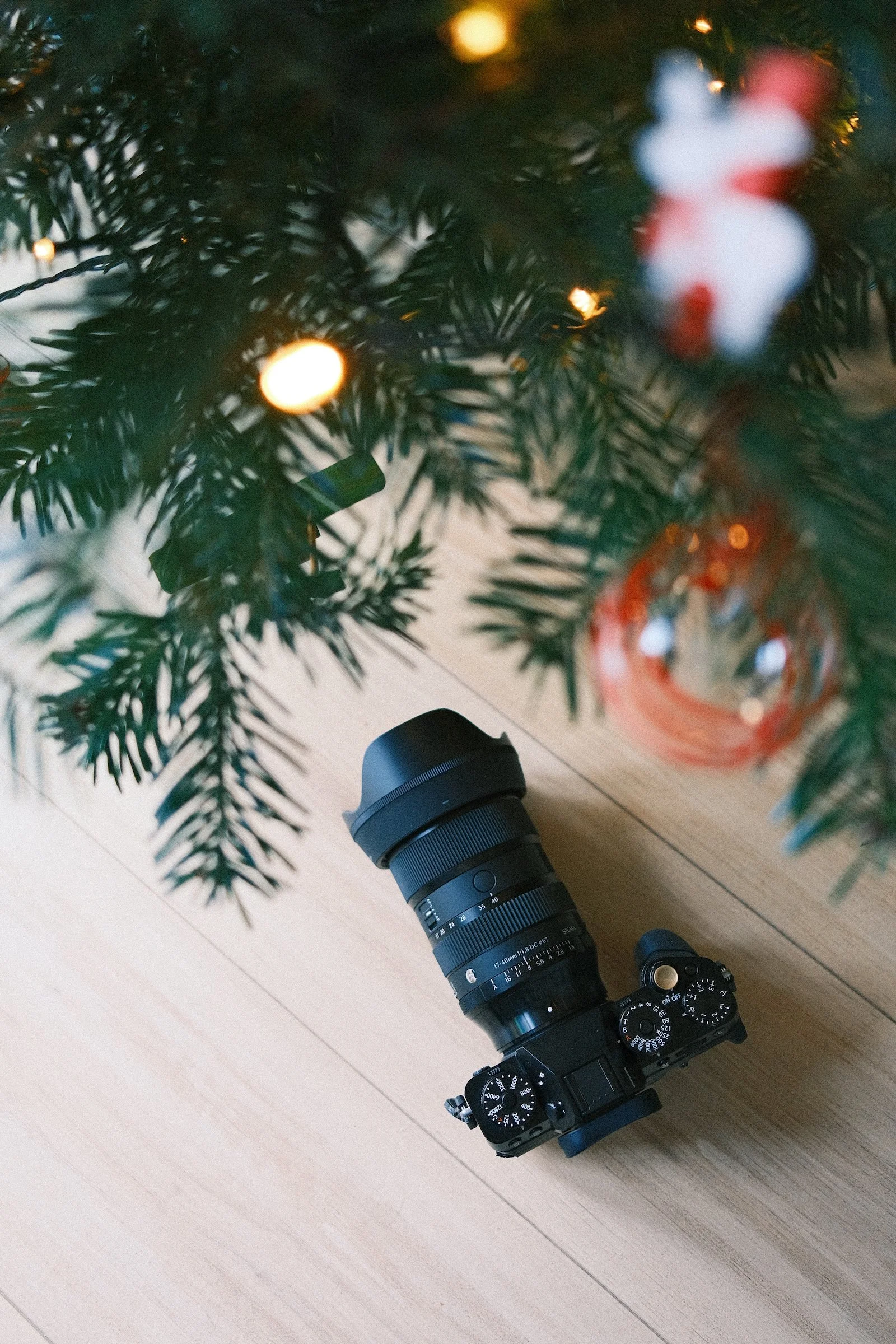
A tale of two lenses (part 2) Sigma 17-40 mm f1.8 DC Art, Fujifilm X mount
Why did I choose the Sigma 17-40mm f1.8 for Fujifilm X Mount?
When I bought into the Fuji X system I started with prime lenses, namely the 14mm f2.8 and the 23mm f2. Over time I realised that my approach of not post processing would be easier at times if I had a zoom lens. I enjoy using primes more, but the convenience of a zoom is undeniable, especially when trying to finesse tiny details in the field. So I purchased the 18-55 mm f2.8-4, also known as ‘the best kit lens ever made’… by some at least. Still, with this nickname being pedalled around a good portion of the internet it was worth a try. And I was pleased with the results from that lens for a good while. However I noticed at times there was a lack of premium feel from it, the build quality didn’t match the primes, and I didn’t like the design where the barrel extends when zooming - to me its a great way to suck in dust and moisture, no matter how much sealing it had. Shooting in harsh conditions with that lens always had me wondering, and I'd rather not have those thoughts rumbling around my brain, distracting me from the task at hand.
During 2025I have started to get asked to take photos for other people more often, so it felt like a good time to upgrade my ‘workhorse’ zoom lens. Mentally I pencilled some criteria out to start my shopping for a new one:
reasonable zoom range, from a ‘normal’ wide to a mid range
constant aperture, I don’t like being limited in my creative choices by focal length
ideally internal zoom mechanism, i.e. the barrel doesn’t extend when zooming
a 67mm filter thread, to align with my Viltrox 56mm 1.2 and Fuji XF 70-300 (and a planned wide angle zoom), to cut down on the number of adapter rings and filters should I want a minimal kit day
weather sealing and dust resistance
have an aperture ring
For a good while I was looking at Fuji’s XF 16-55 f2.8, but it didn’t match some of these points, namely the internal zoom, and the filter thread. The Tamron 17-70mm f2.8 had the desirable filter thread, and a good range of focal lengths covered, but again extends when it zooms, and doesn’t have an aperture ring. I realise some of these points may seem fussy, but I am of a mind that if I'm spending a reasonable sum of money then I want to be happy with my purchase, and would rather not compromise if I don’t have to. However it seemed this might be inevitable as other options ticked even fewer boxes than these two lenses. I was about to make a decision between one of these two when a third option appeared…
Sigma announced they would be releasing a successor to its well regarded 18-35mm f1.8, which was up to that point widely considered as the best APSC zoom lens. The specs of the new lens ticked all of the boxes, and after reading a couple of preliminary reviews online I decided to take the plunge and order my first Sigma lens. So, subsequently the Sigma 17-40 f1.8 DC Art arrived.
But first… let’s talk about Sigma’s packaging!
I’ll get onto the lens shortly, but before then can we just take a moment to appreciate the box. Yes, really…
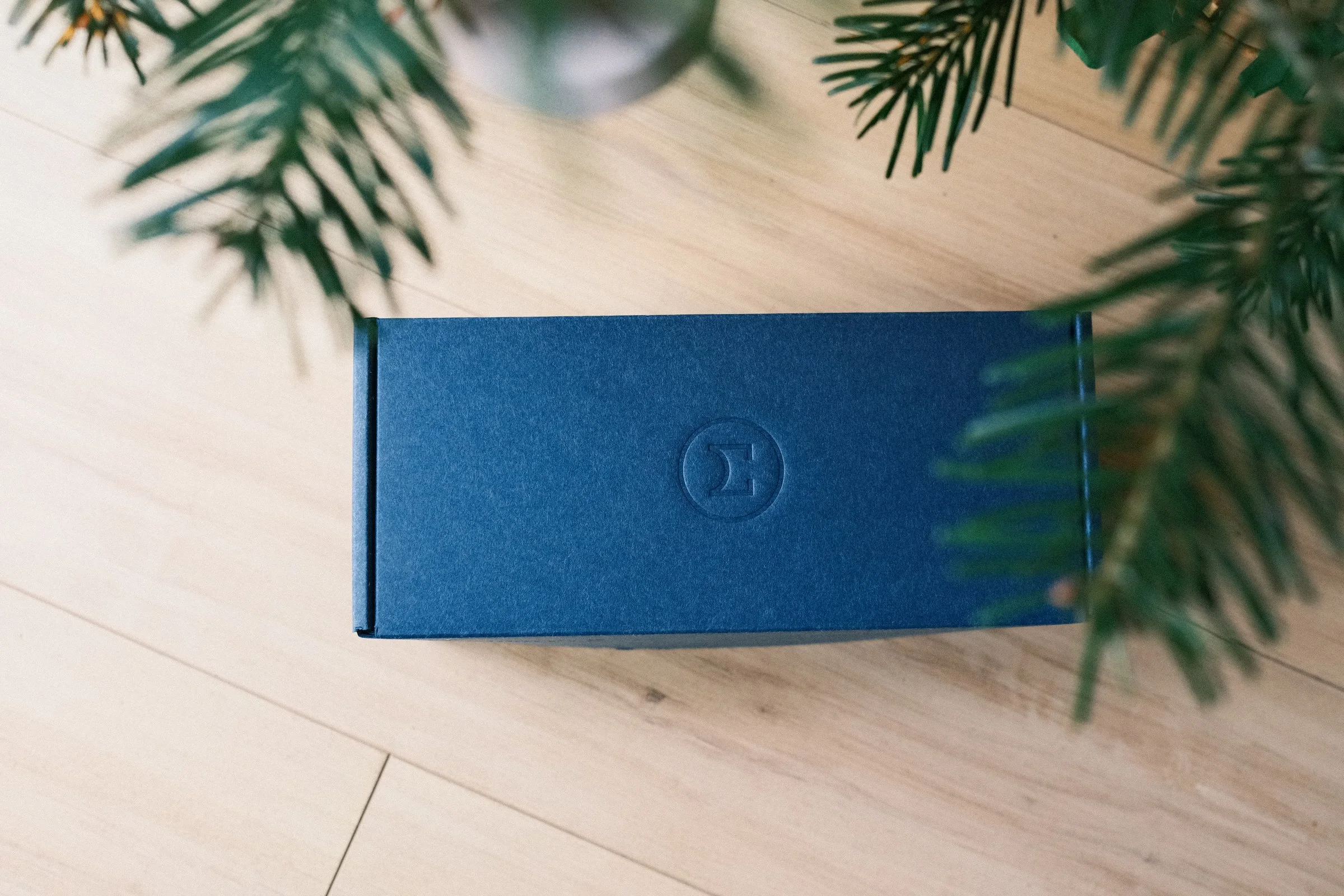
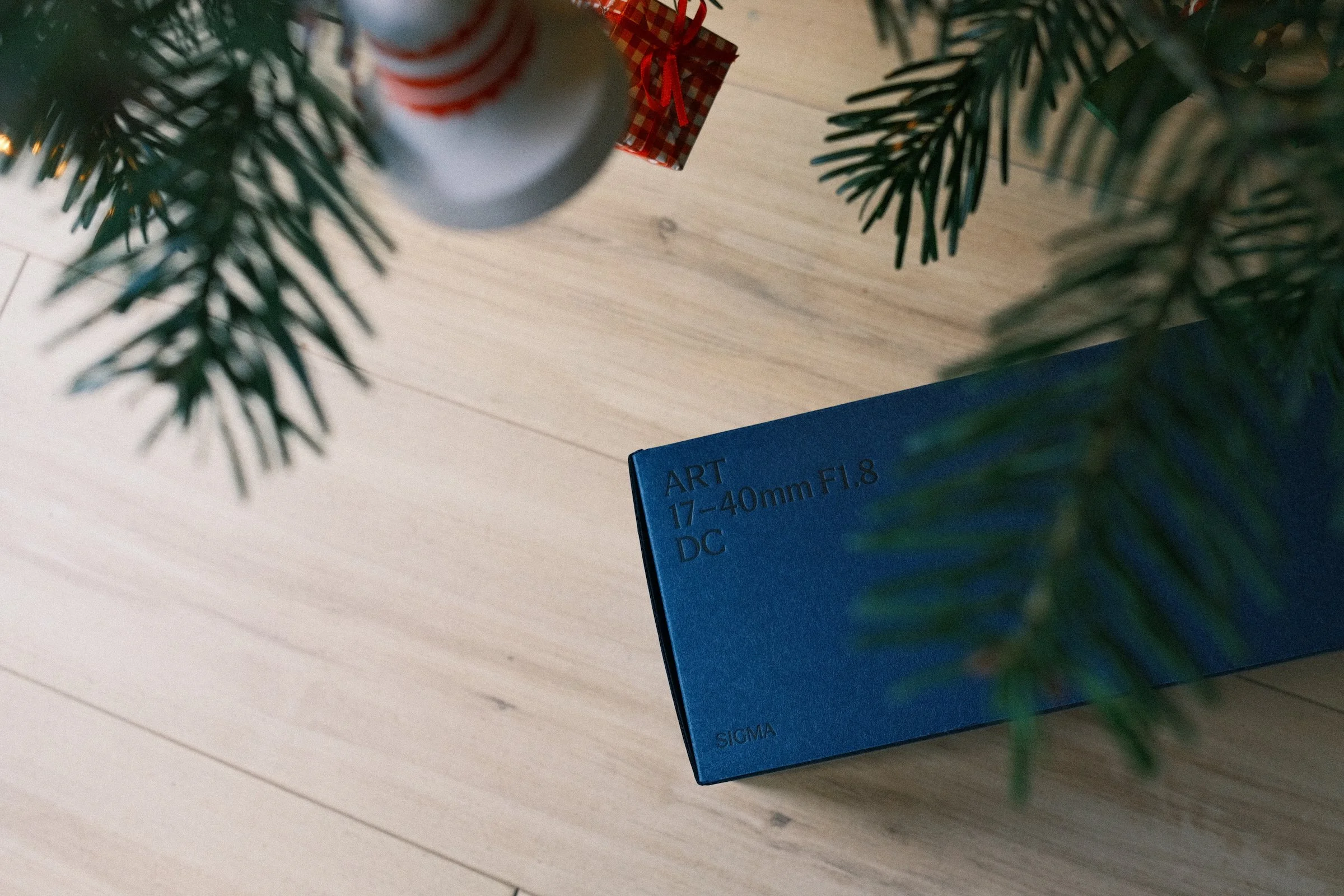
I’ve always enjoyed good design, studying it at college, and I always admire when someone manages to blend aesthetics and functionality effectively. Camera equipment is expensive, so when you order it and you get something in a fairly bland corporately styled box it feels a tad underwhelming. So when the blue box, with a pleasing texture and the beautifully embossed Sigma logo arrived it added to a very pleasant initial impression.
Having worked in the environmental sector for over 20 years I’m always intrigued as to what a company’s environmental policy is when making buying decisions. Many technology brands messaging around this are rather opaque to say the least. Sigma’s is fairly simple. They have a page on their website which sets out their approach to sustainability. In their principles they say they want to reduce their “environmental impact and realizing a low-waste, recycling-oriented society”, and the new packaging aids this by using no synthetic materials in any of the packaging. A few years ago you’d find a box riddled with plastic air bags, bubble wrap or even polystyrene. Now, we have a well designed, aesthetically pleasing box, filled with cardboard inserts designed to do the job of all that plastic, whilst also being easily recyclable.
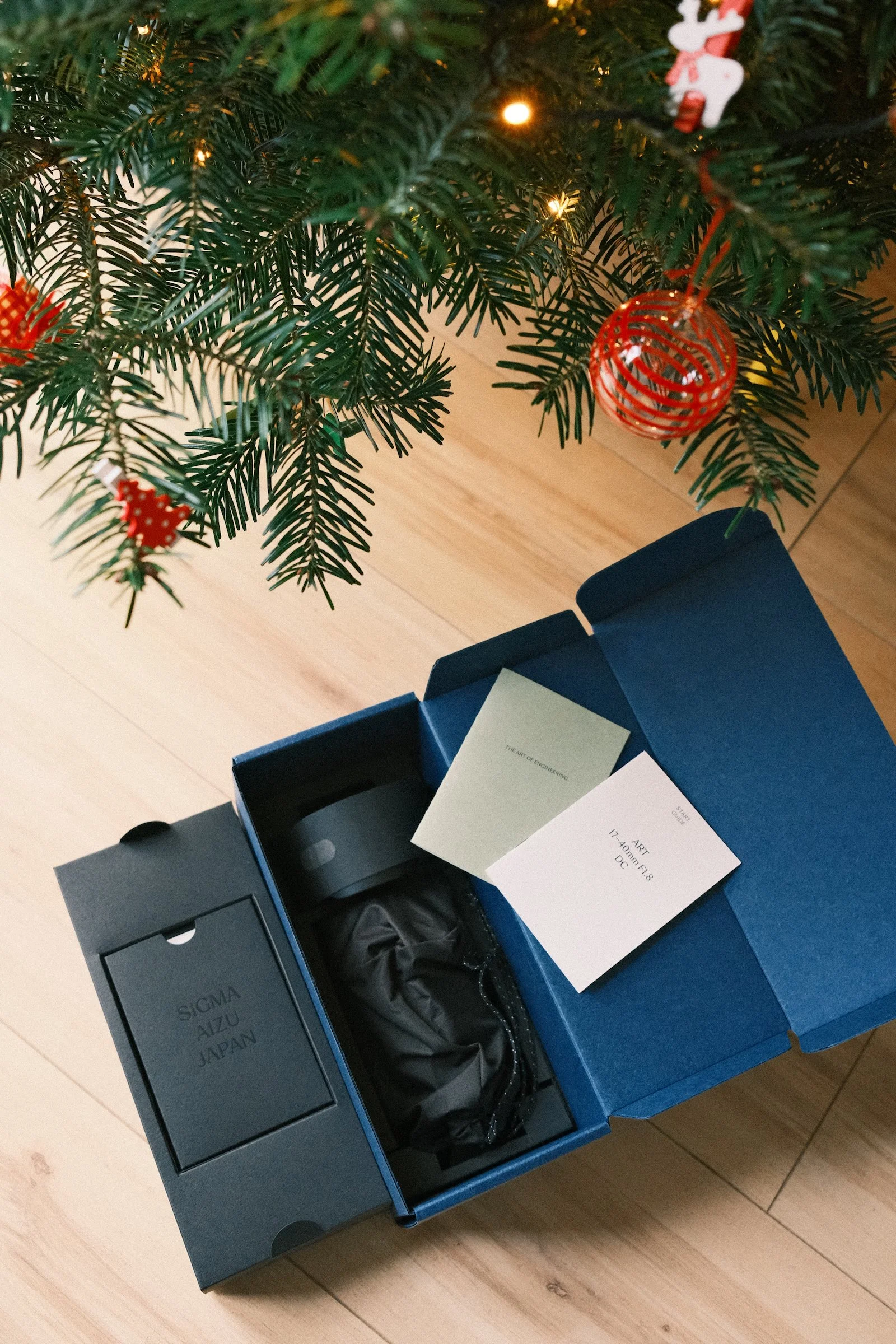
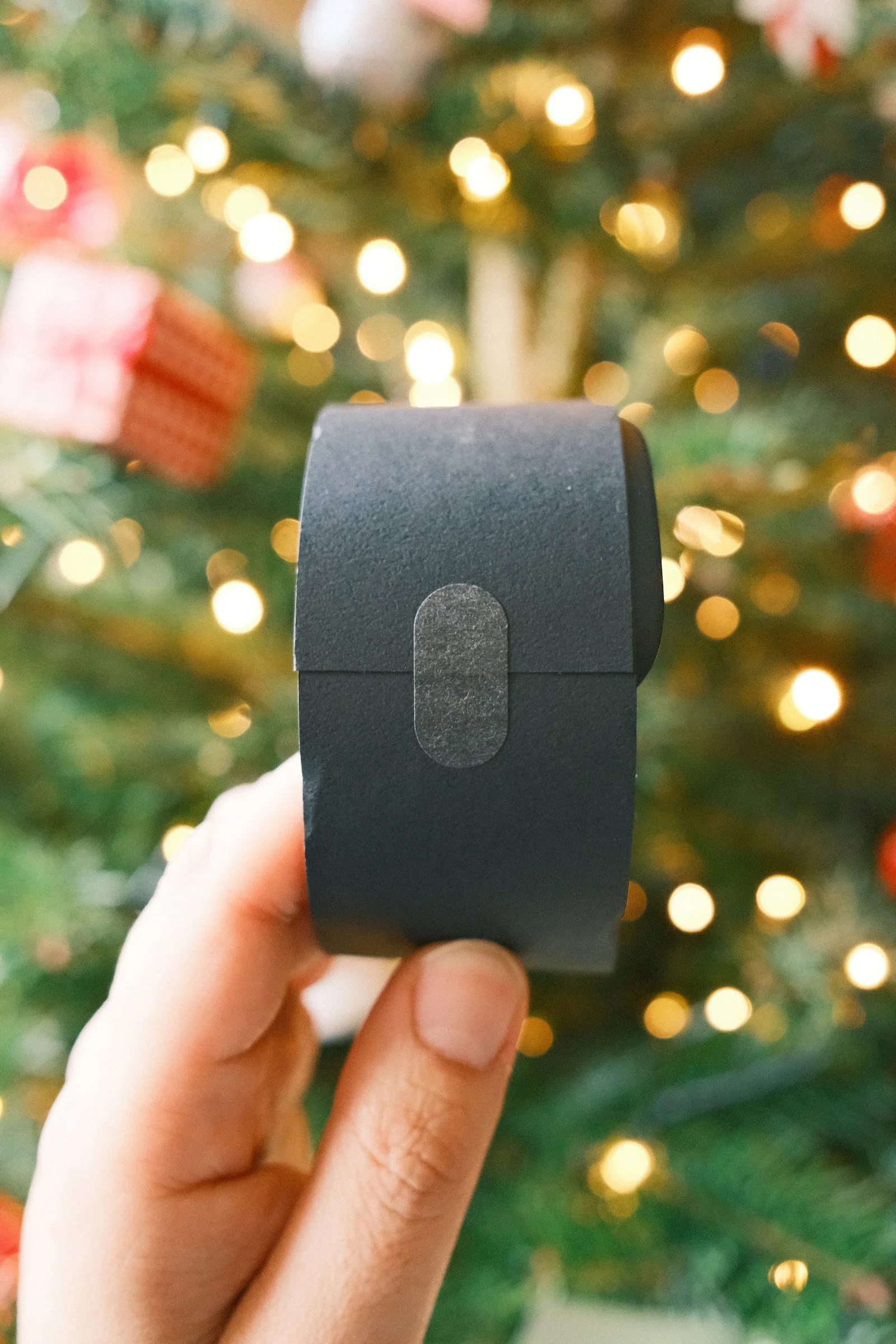

I never thought I'd write anything about the packaging of anything, let alone a whole section of a review (well, some first thoughts) on a box… But its just too lovely, too well designed and made the initial experience really enjoyable not to say something.
Build quality & design of the Sigma 17-40mm f1.8
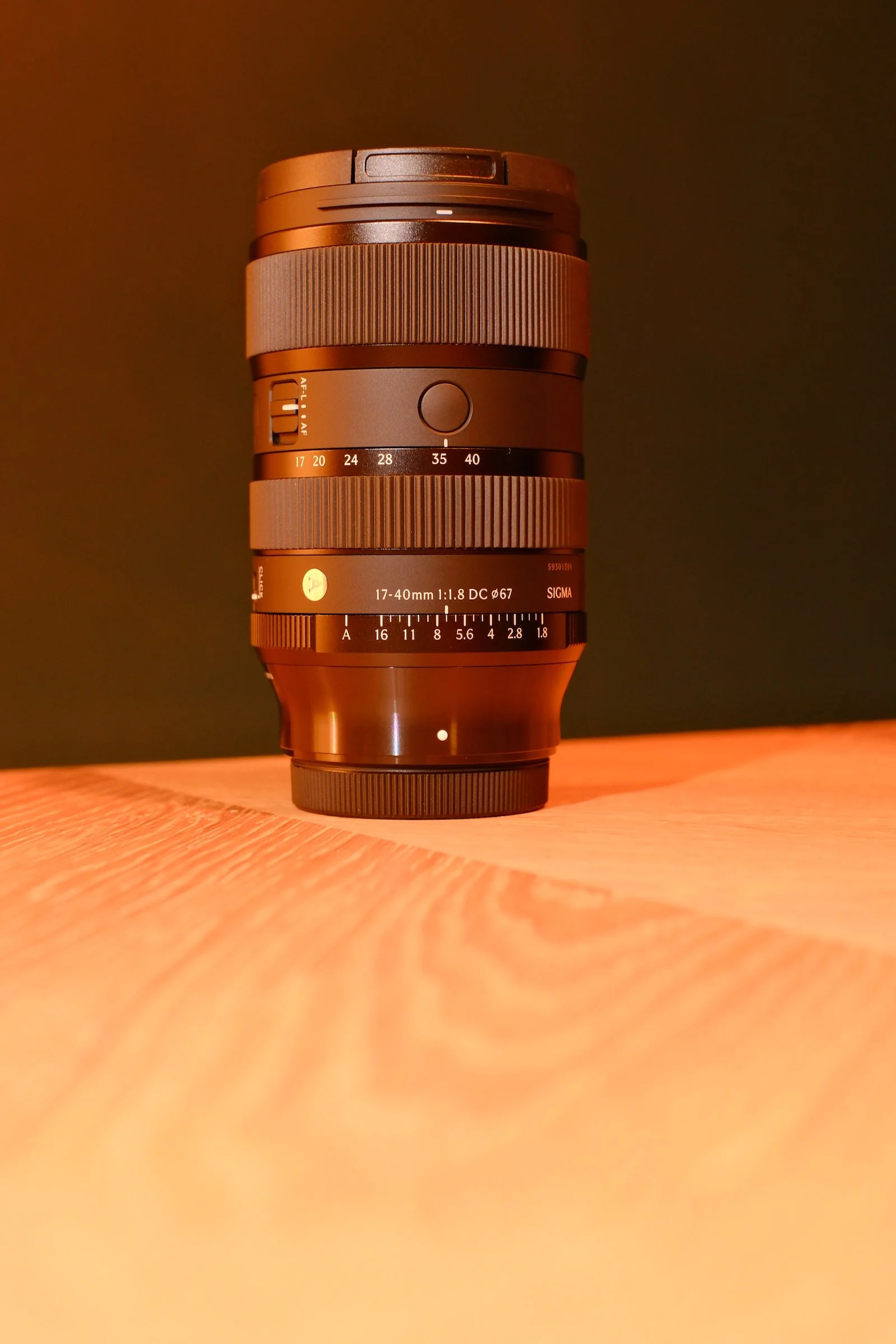
This just a set of initial thoughts really, so it’s a little early to comment on build quality, I will revisit this periodically to update on how things are faring. But what I will say is that the lens feels plenty solid enough, the aperture ring and focus ring are free from any wobble, and reassuringly tight fitting on the lens body. They move freely, but with a pleasing amount of damping. The aperture ring can be clicked or de-clicked with the flick of a switch.
The body is plenty solid in hand. It weighs 535 grams and measures 116mm long by 73mm in diameter. So, when coupled to my X-T5 it makes a reasonable weight package, and isn’t uncomfortable around the neck for a long shoot.
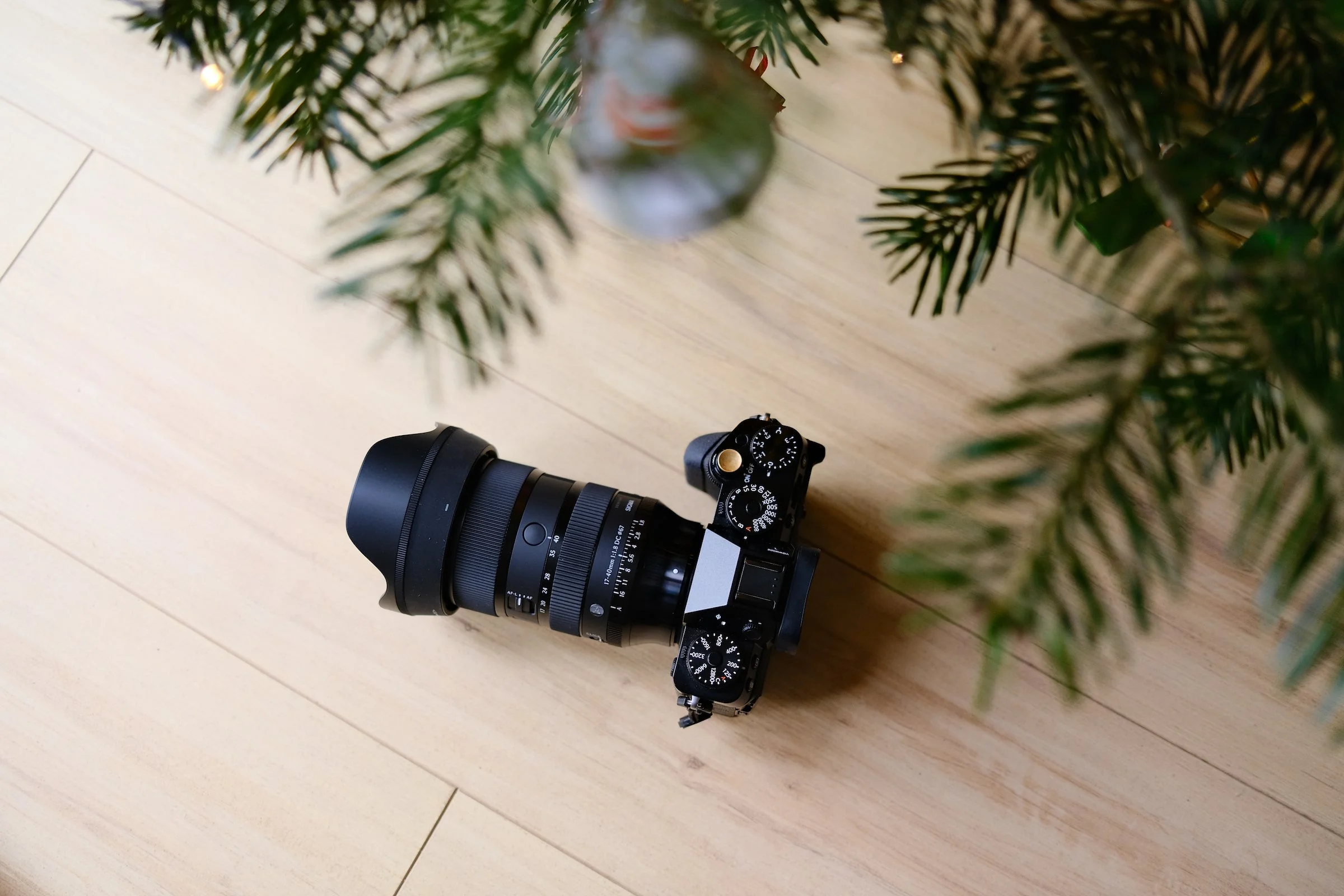
As you’ll see in the image above, it also features a function button on the barrel of the lens. On the Fuji X mount version this operates auto focus lock. A handy feature at times when having to focus and recompose slightly.
Internally the lens has a fast autofocus system driven by Sigma’s High Response Linear Actuator (HLA), which is encouraging at at time when Fujifilm cameras are taking a bit of a beating for their autofocus performance. Pleasingly I've found this lens to be plenty speedy enough for what I shoot - I've tested it on a manic border collie with promising results!
I mentioned in part 1 of this 2 part series that the two lenses I've bought are chalk and cheese. The other one was £69, this one was…not… the RRP of this lens is £779, substantially more, but then I've set out here how it serves a completely different purpose to the TT Artisan 25mm f2 that was subject of part 1.
Image quality with the Sigma 17-40mm f1.8
Obviously how it’s made, the details of its construction, and the beauty of the box are all moot points if it doesn’t help create good images. One of the reasons I decided to go for it was that it seemed to be well praised for its sharpness, whilst also controlling fringing and aberrations well relative to other wide aperture zoom lenses.
I don’t pixel peep, I don’t take photos of brick walls to look at things like distortion, I just take photos and see if I'm happy with the results. I’ve had the lens long enough to be able to take it out a few times, in a variety of conditions, and have been pleasantly surprised by just how sharp it is. One reason I wanted it was to remove the need to change between prime lenses when out in inclement conditions… so far I'm not noticing much of a drop in sharpness compared to the the Fuji primes I currently own, so that’s a big box ticked. Here are some sample images shot in a variety of conditions, of a range of subjects, all using the 17-40.






Final thoughts on the Sigma 17-40 mm f1.8
So, after a few weeks of use I can say I'm happy so far. I’ll check back in during 2026 with some further thoughts, but I'm really pleased Sigma released this lens. Whilst it’s aimed at videographers as much as photographers, it ticked all the boxes I had in my criteria….
It has a really useful zoom range, covering many focal lengths I find myself using
the f1.8 constant aperture is really helpful, I've been testing it in low light indoors, and will be doing so on an evening photo walk around the town I live in soon. Thus far its proving really helpful to have this flexibility
the filter thread fits the kit I already have, meaning I have to carry less ‘stuff’, which is always a bonus
I’ve had it in some light rain, I always try and keep things dry with one of these microfibre towels and, whilst the Sigma description of the sealing is a tad ambiguous, having read how much of a beating people’s copies of its predecessor went through, and the build quality of this one, I have no real qualms about a bit of rain
the aperture ring has a pleasing click, and can be turned off should I decide to turn my hand to some video work
I feel I can trust it for paid work now, I’m still learning to get the best out of it, but I have been increasingly pleased with the opportunities it will open up for how I shoot.
I’ve got some trips planned for 2026 which will really put it through its paces, so I will check back in to update on how things go.