
What did I learn about photography in 2025?
I’m a tad late to this, posting a reflection on last year as we are in the first few days of the second month of 2026, but better late than never. Also, I like to let these sort of reflective things sit and stew before committing finger to keyboard.
So, here are some things I learnt about photography in 2025. Interspersed with the text I've included some of my personal favourite images created last year…
Slowing down with a tripod is good for me
For a little while I’ve enjoyed not shooting much with a tripod. Removing the stillness and restriction a tripod brings felt freeing, but I found myself shooting more images overall, dashing about and firing away. The few times I did get out the tripod in 2025 felt far more mindful because I had to slow down, concentrate on minute details for longer, and I think it made me all the more absorbed in the process.
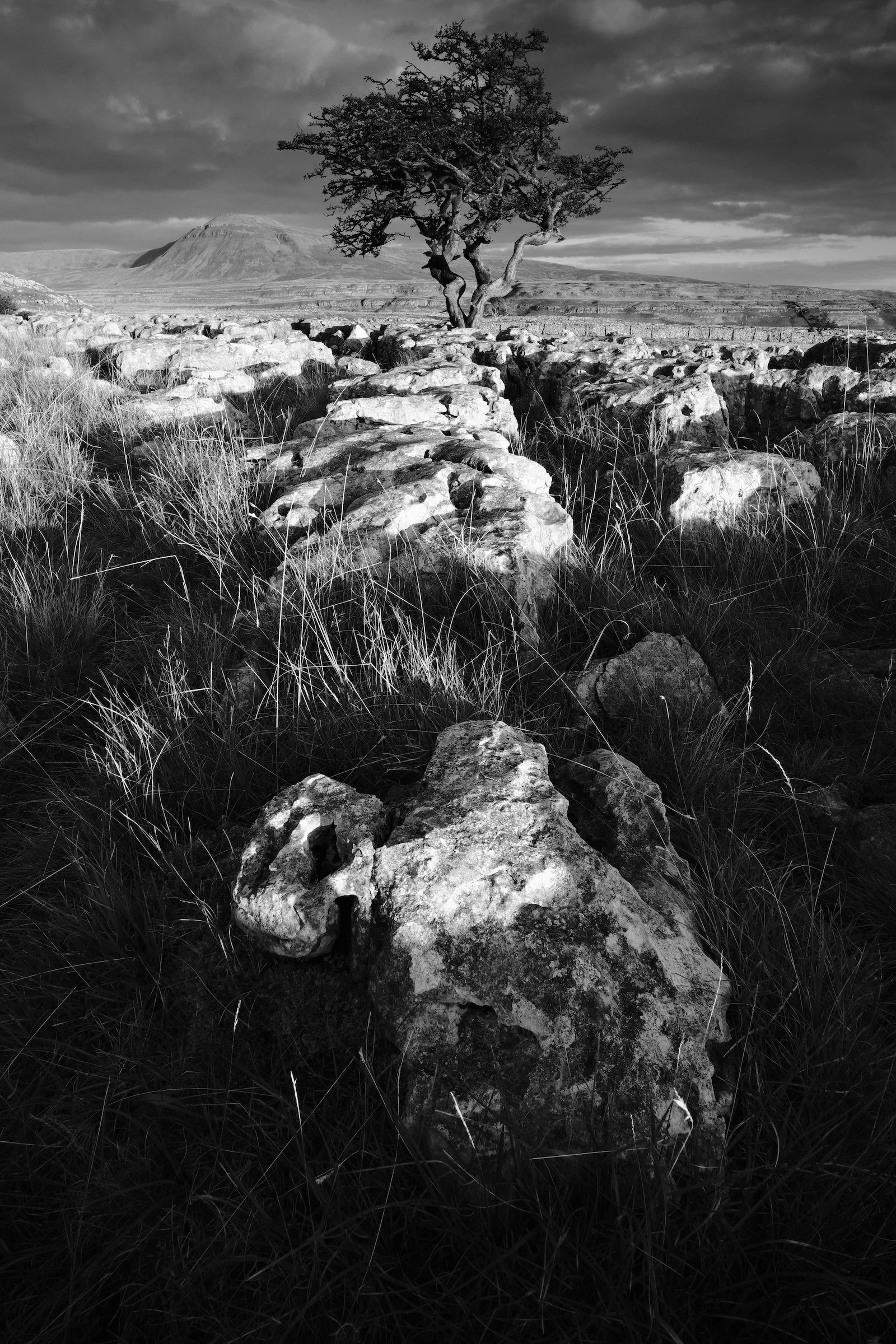
Possibly my favourite image of the year… taken whilst exploring the limestone pavements of the Yorkshire Dales National Park.
Photography is therapy (for me)
On the theme of slowing down, I had a rough time for part of 2025, my day job was rather taxing, being pulled in several directions and with a workload simply not deliverable in the time given to me. So, I spent a few months off recuperating from burnout. What did I do whilst I was off? Well, initially I slept A LOT. Then when my energy started to return I gently went out into nature, and then also with my camera. Being more present in the world around me, and having something to concentrate on with an outcome attached (the creation of an image) was incredibly helpful. It took me to some beautiful locations, it got me into nature, which is good for you in itself. It gave me a purpose that was gentle, and easy to achieve, whilst the process of rebuilding my brain continued.
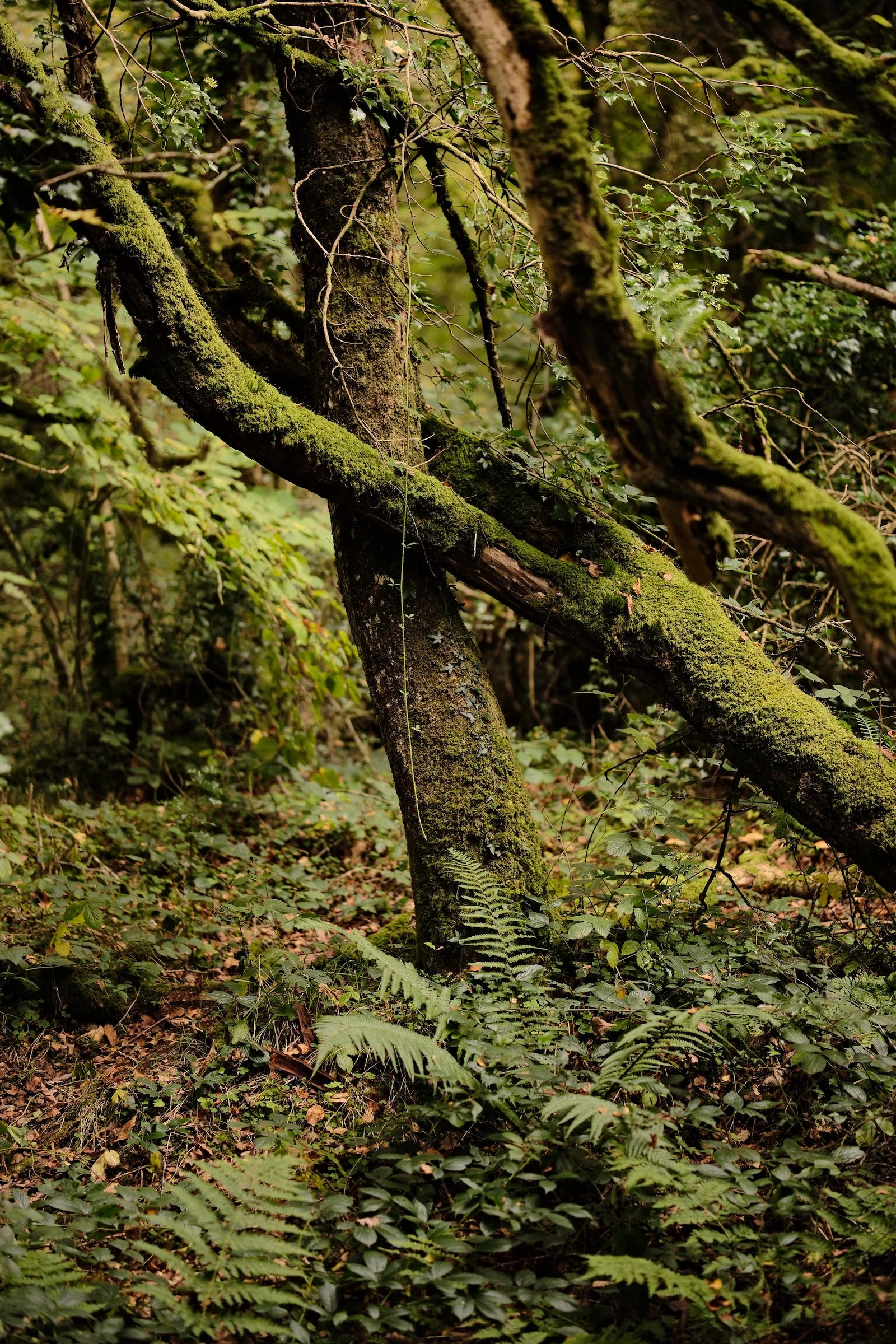
It’s funny what you notice depending on your mood, at a time when I needed some help I thought this tree looked like it was getting a hug. It just stood out to me in that moment.
Pushing yourself outside of your comfort zone is scary, but rewarding
In early September I did something that scared me a little at the time. I was invited on the F Stop Collaborate & Listen podcast to talk about my approach to photography, and why it matters in a world of AI and questions viewers may have about the origin of the images they’re seeing.
I’ve listened for a long while now, and I’ve admired Matt Payne’s approach to photography similarly too. Matt creates authentic images of nature, but in a different way from me, yet we share a lot of the same values. He’s also one of the driving forces behind Nature First, which I'm proud to be a member of. I’d never done anything like this before, but, once I'd settled in, we had a great conversation and I found it really rewarding to connect with someone with similar values. I’ve had some lovely feedback since it aired in the days before Christmas. You can listen to the episode on the first link above, or on Apple Podcasts and Spotify.
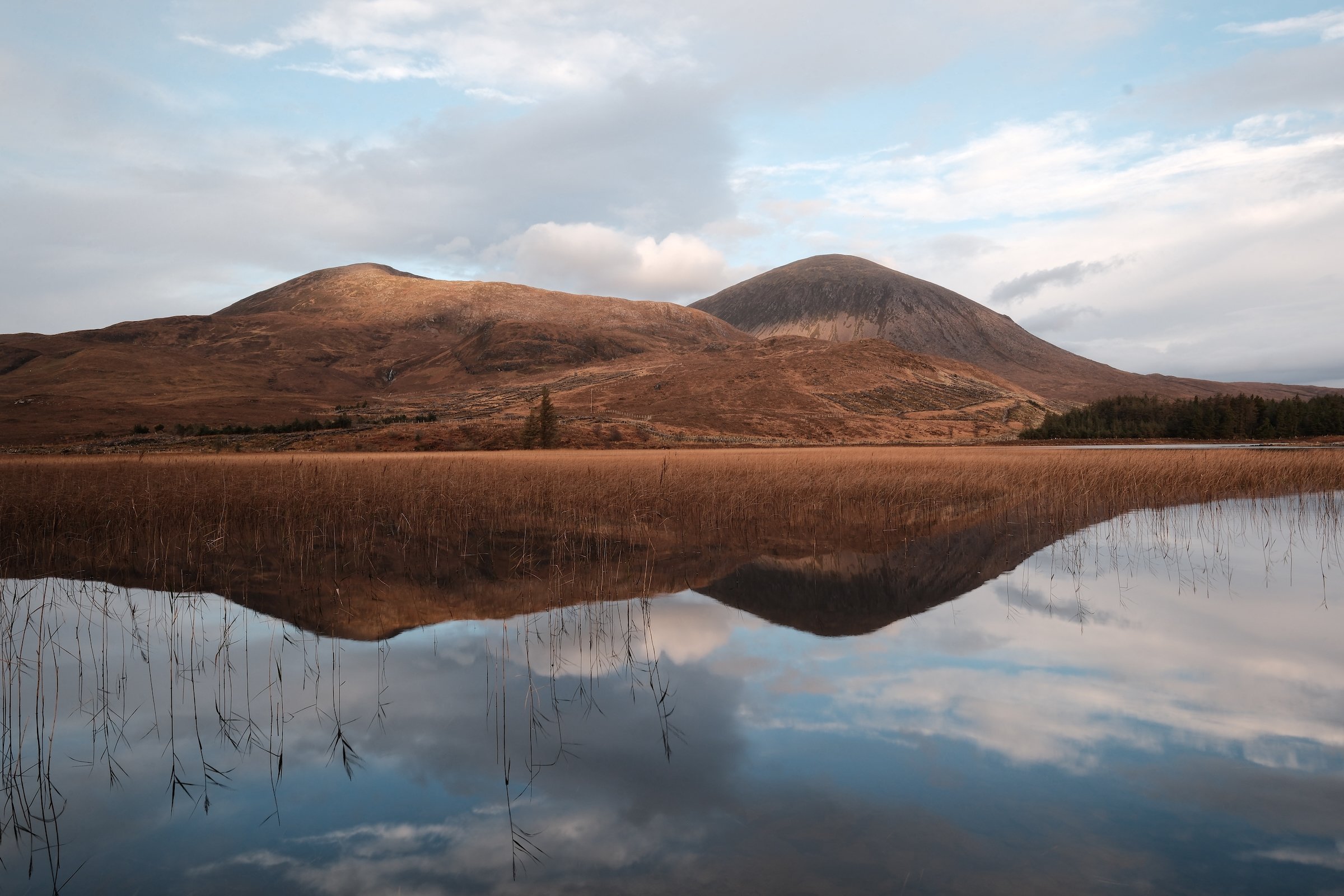
Funnily enough, during a wet week on the Isle of Skye, two things happened: I created this image, and I actually bumped into Matt whilst he was running a workshop. Funny how the world aligns things sometimes.
Creative limitations are really helpful to develop your skills
Another topic we spoke about in the podcast is the benefit of imposing creative limitations. For me this has largely been the ethos of not post processing my work, and shooting using Fujifilm JPEG recipes. But there are all sorts of other versions you could use; only using one focal length, shooting in black and white for a month, creating images of one location, or only shooting at one time of day. There are literally infinite ways you could interpret it, but once you commit i can help remove any creative block.
In preparing for the podcast I was forced to reflect on my time creating images. And I genuinely think that shooting with Fujifilm recipes has made me a better photographer. It’s taught me a lot that I'll cover in another blog post soon, including some frustrations with the process too. But the main thing I've learnt is I appreciate a creative limitation to inspire me to think differently, and create work I'm more happy with. So, 2026 will see more of this, but maybe in different forms as little experiments.
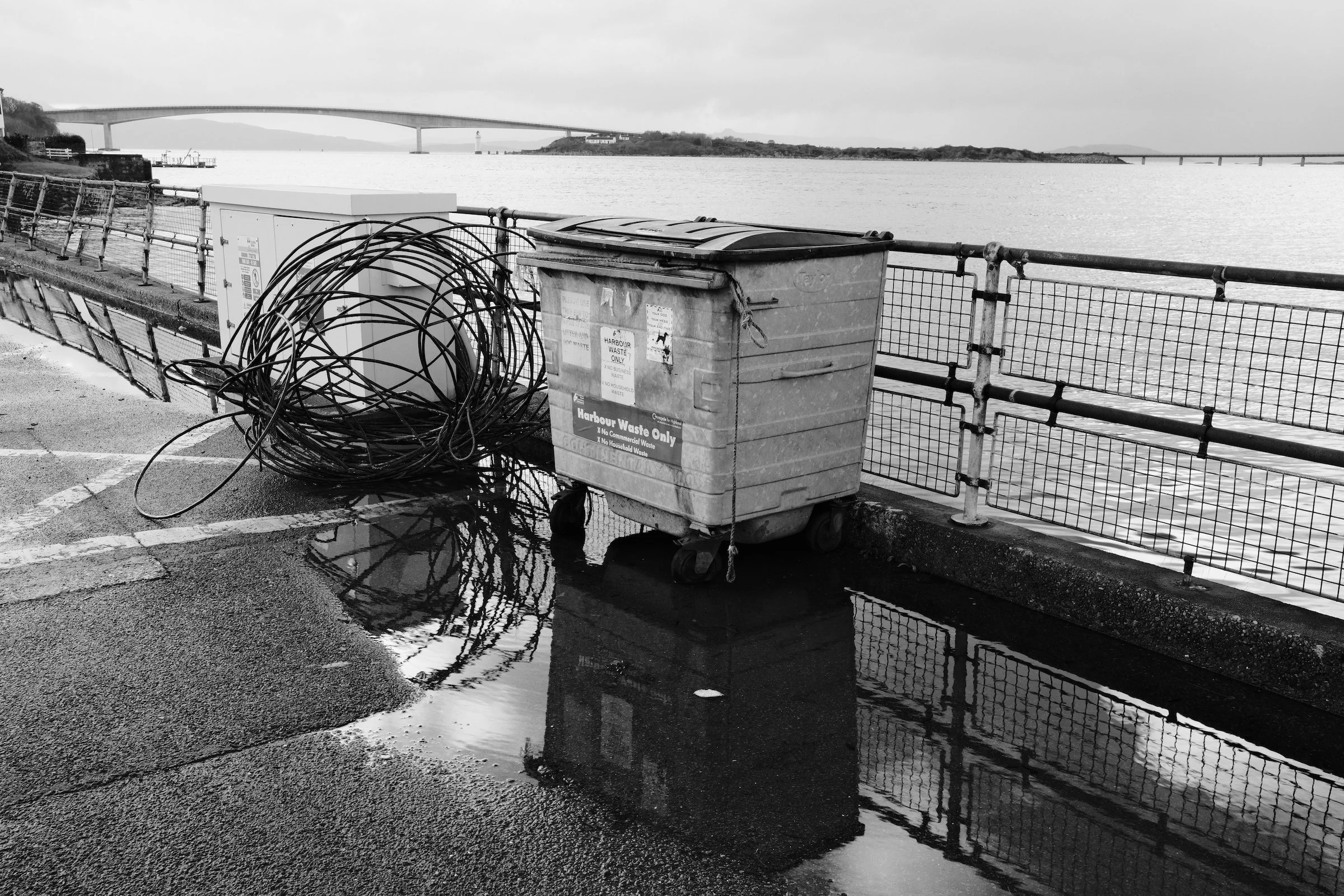
One niche creative limitation I’ve created is to try and create different compositions of the Skye Bridge whilst our electric car is charging in the nearby charging bay. I think i’ve found a good proportion of them now, so it’s forcing me to explore new places, angles and subjects to combine with the bridge.
Landscape photography can be lonely, but photography with friends is fun
Very rarely when I go out with a camera am I accompanied by another photographer. Most of the time I have my border collie, Bentley, or my wife, Emma with me. But very rarely does someone else into photography come out. However, during 2025 an instagram group of Devon photographers evolved into a whatsapp group, and then something greater. It’s been fun to engage with photographers who don’t necessarily shoot in the genre I work in. I find it inspiring to see what others create, and images like the one of the bin above probably have more influence from street photography in them than ‘traditional’ landscape and nature imagery because to groups like our one. If you’re local and interested in joining then check out Photo Club Devon - there are some exciting things planned for 2026.
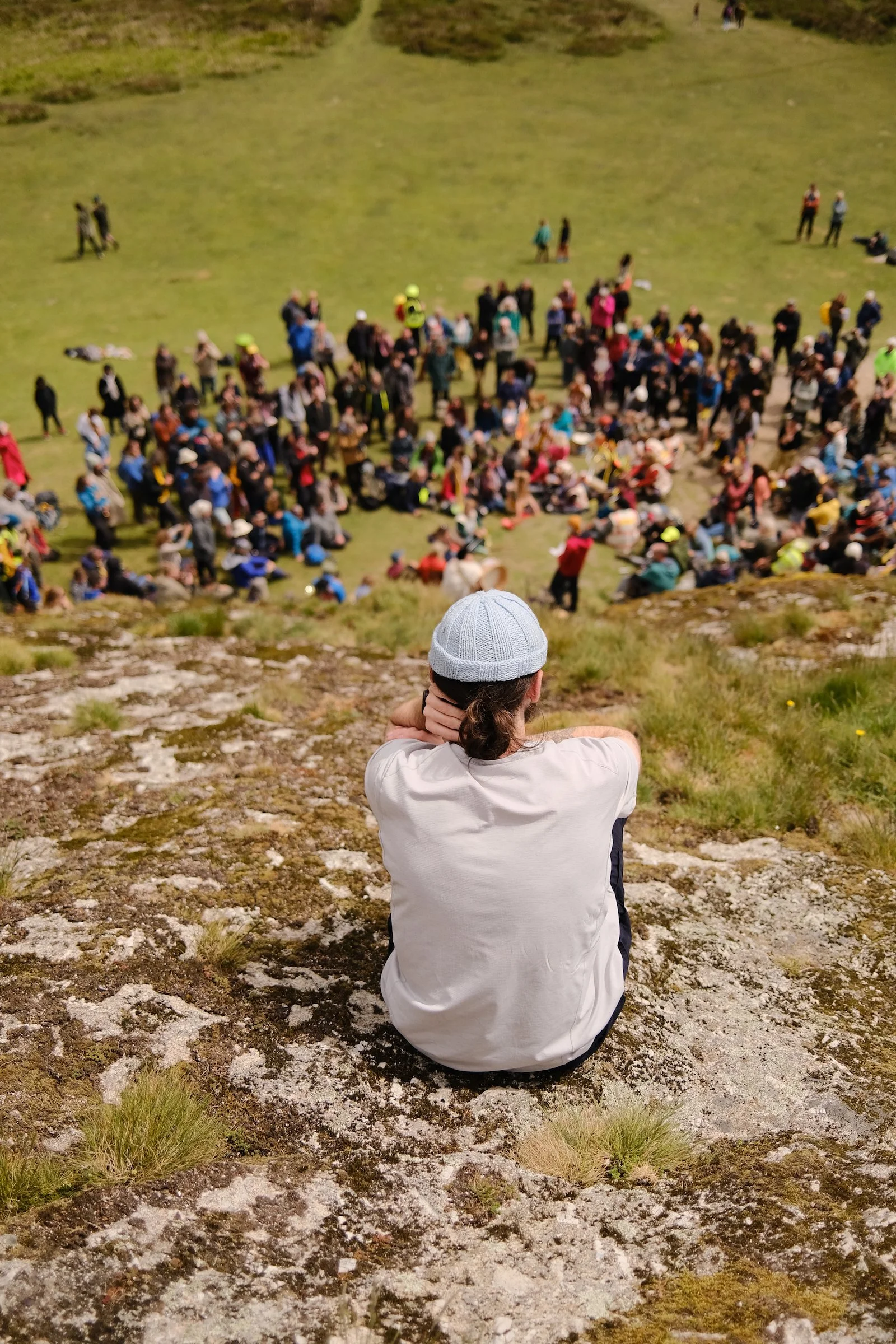
One event I definitely enjoyed with others and my camera was the celebration on Dartmoor at the final outcome of the wild camping court case process… resulting in it remaining the only place to legally wild camp in England despite a legal challenge in the courts by a wealthy investment banker who bought a local estate.
I’ve changed my mind about AI
In 2025 I signed up to be an advocate for Hi From a Human which is a pledge people can make when the totally avoid the use of AI in their creative process. This is becoming incredibly difficult with it being forced on us in many areas of life, but it’s one I believe in. Not only do I think it could make me lazy in my thinking, but I'm horrified by the environmental impact of it - with the data centres used for AI consuming more water than the entire bottled water industry in 2025.
Anyway, before I go off on one too much, I had previously worried that the generation of AI images would be the death of photography. Now, having seen far too many images of people with 7 fingers, 3 legs and worse like AI manipulated images coming out of reputable news outlets from Gaza and other conflicts, I have changed my mind. I think it will start to make people question more where the image they are seeing has come from, how much (if any) ‘truth’ there is to it. Sure, it will get better, and it will get even harder to discern what the truth is, but I think this will place more value on the images that have been created with ‘human ingenuity’, as the Hi from a Human puts it.
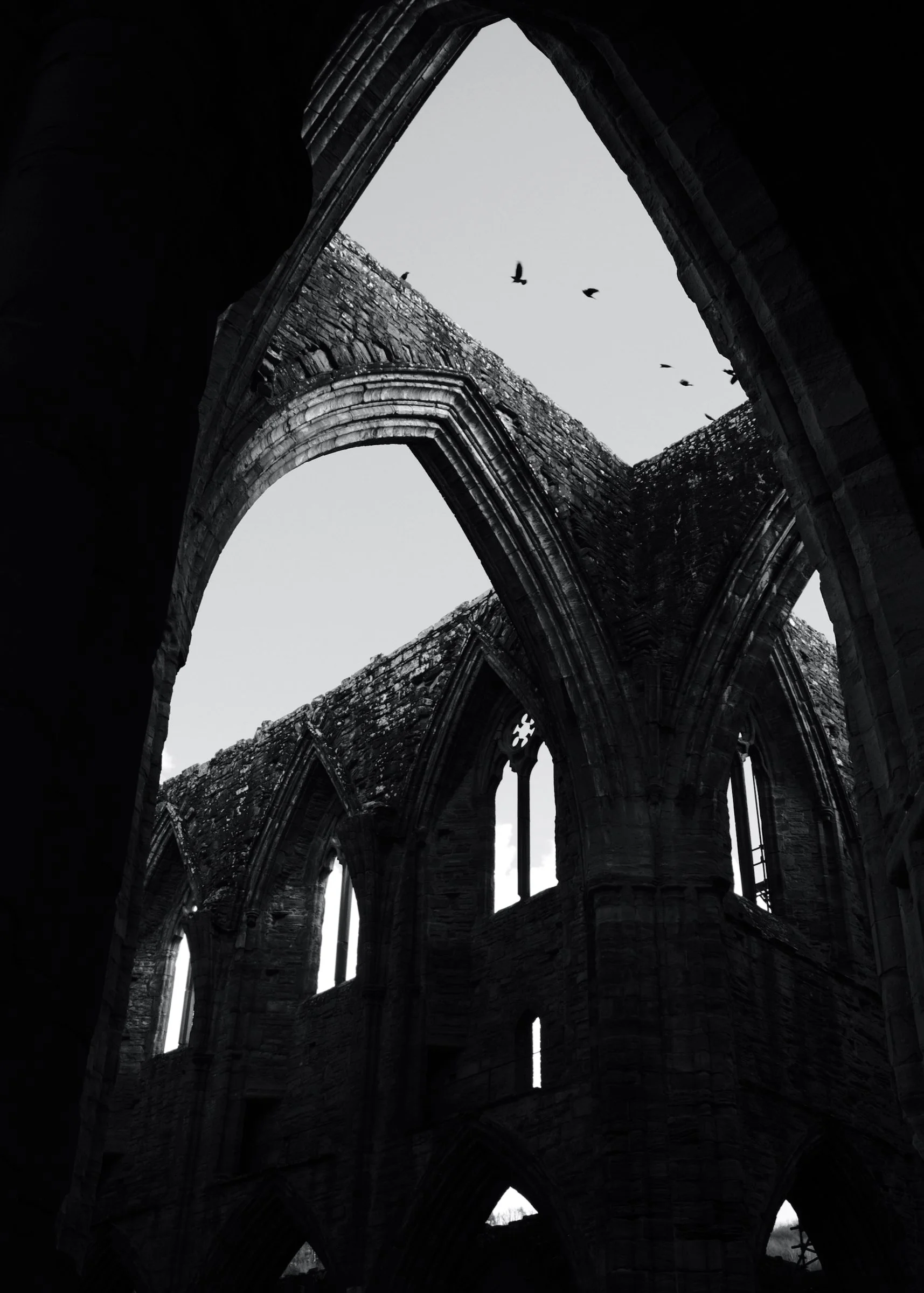
An imperfect image of some crows at Tintern Abbey in Wales, but all the more authentic because of its little flaws.
I tried to play the game, but now I want to change the rules
For a little while I decided to do a little experiment with my Instagram account. I followed Instagram’s advice. I did it blindly. It recommended posting 7 days a week, so I did. It recommended posting a reel or two, so I did.
What happened? Honestly, I gained a few followers, but not many. The proportion of my followers who saw anything I posted didn’t really change. The regular visitors who I enjoy conversation with in the comments section didn’t really expand, and I didn’t gain some meaningful glow of satisfaction. I suspected this might be the case, but I thought I'd run a little experiment for about 6 weeks. At least now I know.
I think it actually had a negative effect overall, it made me put out work I'm less happy with because of the frequency demands, and it made me loathe the process more. I’m still slowly working out what I want to ‘do’ with social media, though if there was a way to do it all offline I'd jump at it, hence the enthusiasm for Photo Club Devon and similar real life approaches. In 2026 I'm running my first workshops, and that’s something I'm really excited about; real world engagement with keen photographers, in beautiful places on Dartmoor, enjoying our time in the outdoors together.
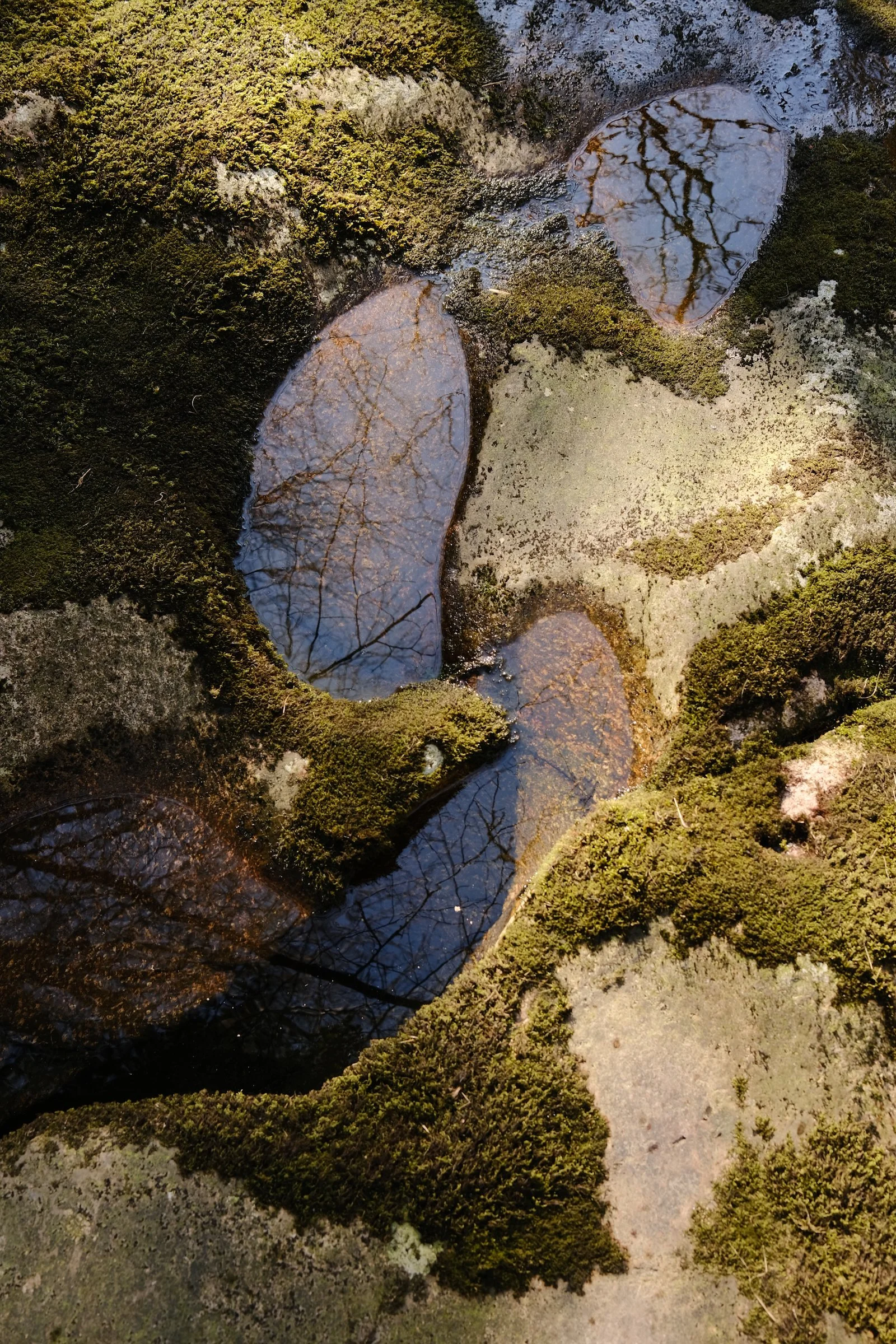
An image I only managed to see by being ‘offline’ enjoying a cup of tea brewed on a riverside rock with no mobile phone signal to be seen.
Experimentation is energising
The final image, below, is the result of a plan that I had for a specific image that didn’t work out. I visited a local reservoir where some dead trees are visible when the water level is below normal. The water level, my timing, and the trees were all spot on, however the weather conditions were absolutely nothing like forecast. I’d hoped for mist, but what had been forecast transpired to be a grey, dull, overcast day with intermittent insanely heavy showers. So, what I had in mind wouldn’t work. I decided I didn’t want to take a conventional image in dull conditions, so I was forced to consider what was feasible. It was my first proper foray into trying to create Intentional Camera Movement images, and I'm really pleased with the atmosphere the trees and the movement created. It’s something I've carried into 2026 and use intentionally from time to time, it almost feels more like painting than photography at times, there’s a very different beauty about the process and the outcome.
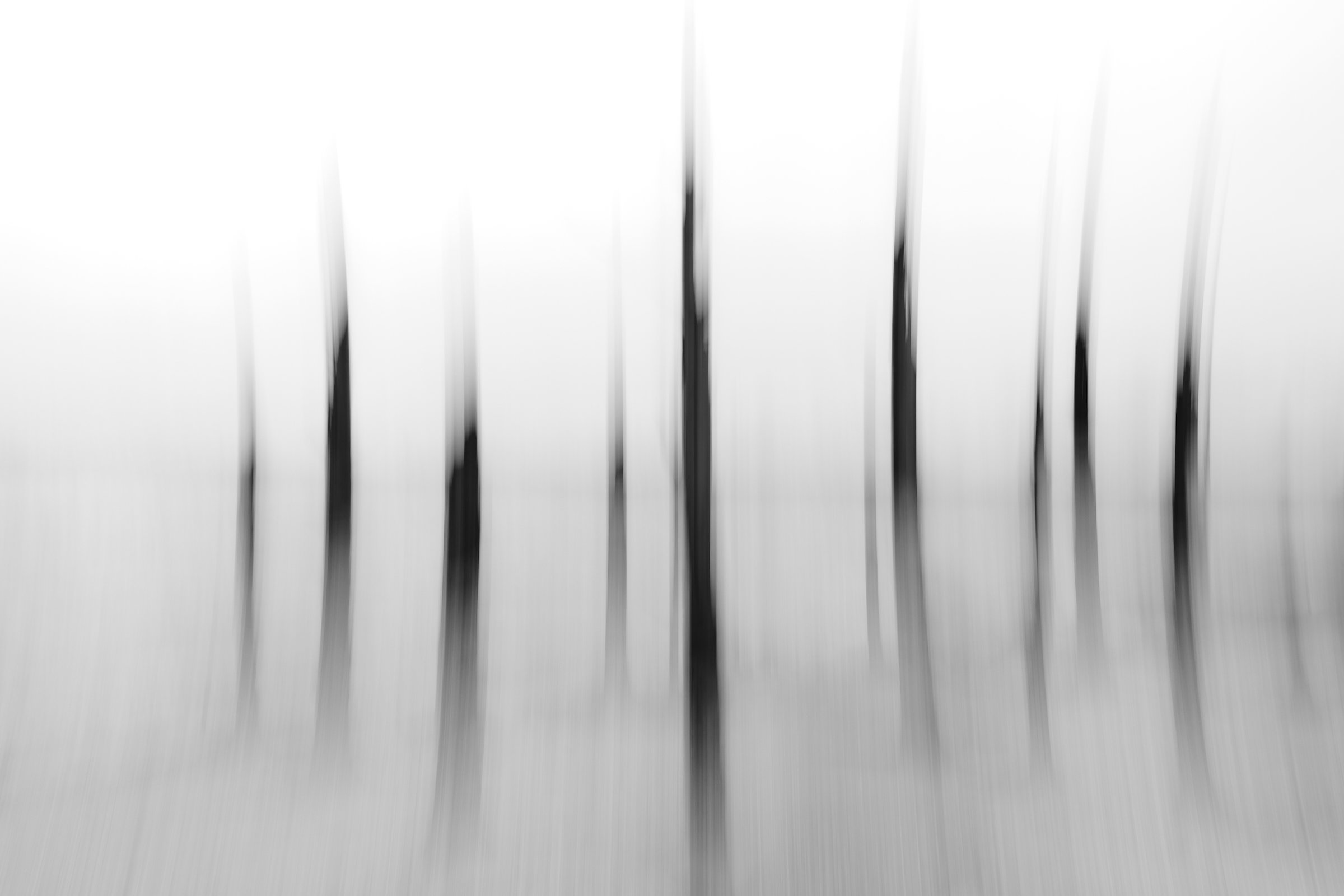
“Creativity is not the finding of a thing, but the making of something out of it after it is found” James Russell Lowell.
So there we have some of the learning points I took away form 2026 around my photography. The beauty of this hobby is it’s never finished, so I'm looking forward to comparing these with their successors in early 2027.